The Daily Blade: Joby Martin & Kyle Thompson
The Daily Blade, hosted by Pastor Joby Martin of the Church of Eleven22 and Kyle Thompson of Undaunted.Life, is a short-form devotional show that equips Christians to apply the Word of God to their everyday lives.
---
Connect with us at communication@coe22.com
Want to support this podcast and other work of The Church of Eleven22?
Text DONATE to 441122 or visit https://coe22.com/donate
---
Don't miss the chance to join Pastor Joby & Kyle in person at the 2025 Men's Conference in Jacksonville, Florida — grab your seat at http://mensconference.com
The Daily Blade: Joby Martin & Kyle Thompson
#257 - Kyle Thompson // O Come, O Come Emmanuel
Use Left/Right to seek, Home/End to jump to start or end. Hold shift to jump forward or backward.
We trace the ancient roots and fierce hope of O Come, O Come Emmanuel, moving from the O Antiphons to Isaiah, 1 Corinthians, and Hebrews to show why “God with us” ransoms captives and shatters death’s sting. We point listeners to a modern take from Skillet and end with a charge to rejoice and stay sharp.
• origin of the hymn in O Antiphons and Latin chant
• Emmanuel as “God with us” from Isaiah 7:14 and Matthew 1:23
• ransom and redemption in Mark 10:45
• the Rod of Jesse and messianic justice in Isaiah 11
• victory over death in 1 Corinthians 15 and Hebrews 2
• encouragement to rejoice and live equipped for the fight
Thank you for listening to today's episode. Before you go, if you want to help equip other men for the fight, share this podcast around and leave us a five star rating and review
Want to connect? Email communication@coe22.com
Welcome to the Daily Blade. The word of God is described as the sword of the spirit, the primary spiritual weapon in the Christian's armor against the forces of evil. Your hosts are Joby Martin and Kyle Thompson, and they stand ready to equip men for the fight. Let's sharpen up.
SPEAKER_01:All right, to all you early morning, the Daily Blade listeners, this may be the first one you hear of the year. So here we are. Welcome back in. Merry Christmas. Christ is born. But guys, let's get down to business here. This week, we're looking at five Christmas carols and the rich theology and biblical truths they're in. Yesterday we looked at Come, Thou Long Expected Jesus. And today we're looking at my personal favorite Christmas song of all time, O Come, O Come Emmanuel. So for the record, my favorite version of this song is from my buddies in the band Skillet. They just released it this year for Christmas season. And oh man, oh man, they killed it. They absolutely killed it. It might be one of the best things that they've ever recorded and released. And I'm absolutely serious. So go and check that out. So this hymn is very old. Okay. If you're researching it, its origins trace back to the 8th or 9th century. So it was drawn from O Antiphones, which is sung by monks seven days before Christmas Eve or was in that time. And the Latin metrical form of O come, O come Emmanuel was composed in the 12th century. So it was actually a Latin chant called Vinny Emmanuel. Now the English lyrics to this have changed throughout the years. So you may have learned a slightly different version than the one I'll be reading. But let's go ahead and dig in, verse one. O come, O come, Emmanuel, and ransom captive Israel that mourns in lonely exile here until the Son of God appear. So let's look at Emmanuel. So this means God with us, Isaiah 7 14. Therefore the Lord himself will give you a sign. Behold, the virgin shall conceive and bear a son and shall call his name Emmanuel. So that is the verse that the Apostle Paul quotes as well in Matthew 1 23. And why is this important? Because it shows that God is a personal God. God is present. God wants to be in relationship with us. He's not a distant father. He's not a father that just wants to set things in motion and then just you know sit back and watch as the deists believe. No, he is involved relationally. Now back to the song, and ransom captive Israel. So Christ is a redeemer. And not only that, he is a redeemer that buys back his people. So in Mark 10 45, for even the Son of Man came not to be served, but to serve and to give his life as a what? As a ransom for many. Now let's go to the third verse of this hymn, which is actually my favorite. Oh come thou thou rod of Jesse free, thine own from Satan's tyranny, from depths of hell thy people save, and give them victory o'er the grave. So the rod of Jesse is a messianic title, so we see this in Isaiah eleven, and I'll read starting in verse one. There shall come forth a shoot from the stump of Jesse, and a branch from his root shall bear fruit, and the spirit of the Lord shall rest upon him, the spirit of wisdom and understanding, the spirit of counsel and might, the spirit of knowledge and the fear of the Lord. And his delight shall be in the fear of the Lord. He shall not judge by what he his eyes see, or decide disputes by what his ears hear, but with righteousness he shall judge the poor, and decide with equity for the meek of the earth, and he shall strike the earth with the rod of his mouth, and with the breath of his lips he shall kill the wicked. And then this line from the hymn, From depths of hell thy people save, and give them victory o'er the grave. So we see the Apostle Paul elucidate this in first Corinthians fifteen, starting in verse fifty-four. When the perishable put on the imperishable, and the mortal puts on immortality, then shall come to pass the saying that is written, Death is swallowed up in victory. O death, where is your victory? O death, where is your sting? The sting of death is sin, and the power of sin is the law, but thanks be to God who gives us the victory through our Lord Jesus Christ. And this too in Hebrews two, verses fourteen and fifteen, since therefore the children share in flesh and blood, he himself likewise partook of the same things that through death he might destroy the one who has the power of death, that is, the devil, and deliver all those who through fear of death were subject to lifelong slavery. And with that reality, we can rejoice, rejoice. Merry Christmas, everyone.
SPEAKER_00:Thank you for listening to today's episode. Before you go, if you want to help equip other men for the fight, share this podcast around and leave us a five star rating and review. Stay sharp.


Podcasts we love
Check out these other fine podcasts recommended by us, not an algorithm.
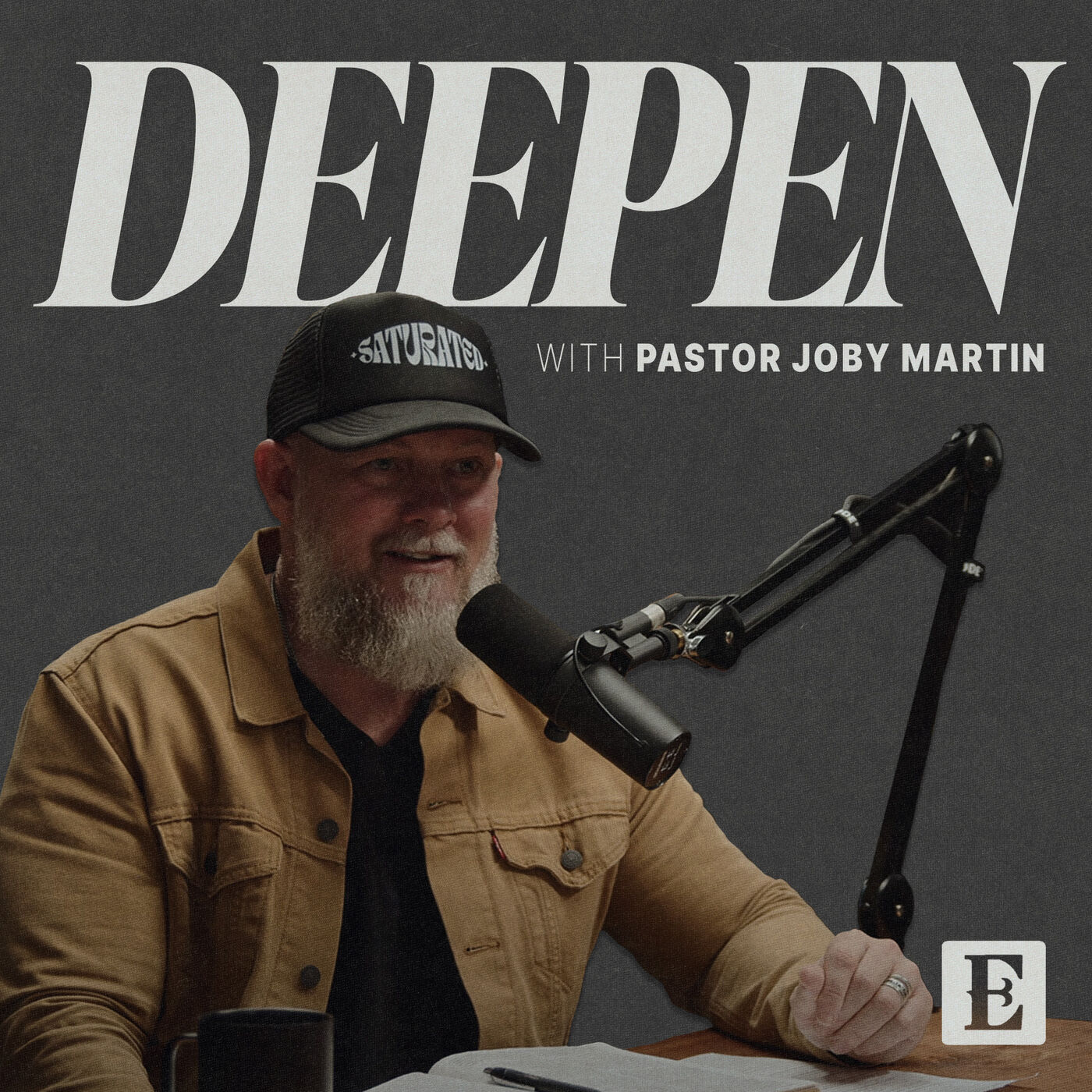
Deepen with Pastor Joby Martin
Pastor Joby Martin
Undaunted.Life: A Man's Podcast by Kyle Thompson
Undaunted.Life