The Daily Blade: Joby Martin & Kyle Thompson
The Daily Blade, hosted by Pastor Joby Martin of the Church of Eleven22 and Kyle Thompson of Undaunted.Life, is a short-form devotional show that equips Christians to apply the Word of God to their everyday lives.
---
Connect with us at communication@coe22.com
Want to support this podcast and other work of The Church of Eleven22?
Text DONATE to 441122 or visit https://coe22.com/donate
---
Don't miss the chance to join Pastor Joby & Kyle in person at the 2025 Men's Conference in Jacksonville, Florida — grab your seat at http://mensconference.com
The Daily Blade: Joby Martin & Kyle Thompson
#351 - Kyle Thompson // Crushed for Our Iniquities
Use Left/Right to seek, Home/End to jump to start or end. Hold shift to jump forward or backward.
Isaiah 53:4–6 is one of those passages that leaves no room for vague faith. We slow down and read the words carefully: grief carried, sorrow borne, transgressions pierced, iniquities crushed, peace purchased, healing given. Then we ask the uncomfortable question hiding in plain sight: why do we keep assuming that suffering automatically means God is punishing the person who suffers?
We unpack why Isaiah’s structure is so deliberate. The moral failure belongs to us, and the suffering belongs to Him. That is substitutionary atonement in its most direct form, and it forces us to deal with sin honestly instead of brushing it off as “not a big deal.” We connect Isaiah’s prophecy to the consistent New Testament witness about Jesus bearing sin, bringing righteousness, and making peace with God possible without God lowering His standards. If you’ve ever struggled to explain what the cross accomplished, these verses give language that is both simple and sharp.
We also tackle a modern objection head-on: why couldn’t God just wave His hand and make sin disappear? The answer gets to the heart of God’s justice, God’s constancy, and the shocking claim at the center of Christianity that God chooses to absorb the consequence Himself. We end with the blunt confession of verse 6: we are the sheep, we wander, and we need a Shepherd. Subscribe, share this with a friend, and leave a five-star rating and review.
Want to connect? Email communication@coe22.com
Welcome to the Daily Blade. The word of God is described as the sword of the Spirit, the primary spiritual weapon in the Christian's armor against the forces of evil. Your hosts are Joby Martin and Kyle Thompson, and they stand ready to equip men for the fight. Let's sharpen up.
Isaiah 53:4-6 Read Aloud
Why We Misread Suffering
Pierced For Us And Healed
We Are The Sheep
Why Substitution Is Not Cruel
God Absorbs The Debt We Owe
SPEAKER_01Welcome back. This week we've been digging into Isaiah 53. In order to understand what is being prophesied in that chapter, we established what was written in the first 52 chapters of the book. And yesterday we got into the first three verses of Isaiah 53. And with those first three verses, we see that humanity was disabused of their notion of what a Savior King would look like and be like. And now the rubber really starts to meet the road with the next three verses. So Isaiah 53, verses 4 through 6. I mean, guys, these can accurately be called the theological center of gravity for the entire Bible. And I swear I'm not being hyperbolic at all. And you mean you've probably heard of substitutionary atonement at this point, right? And nowhere is that theological concept, that reality, described in more plain language and with more surgical precision than with these three verses. So we're going to go and read them here again, Isaiah 53, verses 4 through 6. Surely he has borne our griefs and carried our sorrows, yet we esteemed him stricken, smitten by God and afflicted. But he was pierced for our transgressions, he was crushed for our iniquities. Upon him was the chastisement that brought us peace, and with his wounds we are healed. All we like sheep have gone astray, we have turned every one to his own way, and the Lord has laid on him the iniquity of us all. So again, the prophet Isaiah wrote this under divine inspiration, and the structure here is not accidental. It's very deliberate. In every line, the moral category belongs to us as humanity, and the suffering belongs to him, the servant, the Messiah. So with verse four, we actually see a correction. So the the crowds who actually watched the servant suffer assumed, as everyone else would have at that time, that he was being punished by God for his own sins. So that was standard ancient theology, which has actually carried through to today, if we're being honest. And it's this suffering equals divine punishment for personal sins. So we even see this in the oldest book of the Bible, the book of Job. That's exactly what his friends did. That's the exact argument that they made to Job. But then Isaiah drops the hammer in verse five. He was not stricken for his own sin, he was pierced for our transgressions, he was crushed for our iniquities. And this didn't happen by accident for no reason, right? His wounds were not in vain. As we see in verse five, it is by his wounds that we are healed. And this sentiment is echoed all over the New Testament. So Matthew talks about how Jesus took our illnesses and bore our diseases. Peter talks about how he bore our sins in his body on the tree, that we might die to sin and live to righteousness. And then the Apostle Paul argued that for our sake he made him to be sin who knew no sin, so that in him we might become the righteousness of God. I'm sure a lot of that should sound familiar to you. And then in verse 6 of Isaiah 53, it's a confession that really seals the deal. All we like sheep have gone astray, we have turned every one to his own way, and the Lord has laid on him the iniquity of us all. So, guys, this isn't flattering language. This isn't just, you know, ancient poetry of some kind. I mean, sheep are dumb animals, right? They're followers, they're wanderers, they have no predatory instincts, they're not noble animals. They they are entirely dependent on the shepherd for life and protection. And without a shepherd, they have no defenses and no hope. And I try to tell people all the time that the Bible is for us and not about us, and I typically caution people from trying to find who they are in whatever Bible event or Bible story that they're reading. But in this case, that's absolutely what we have to do. Because we are the sheep. I am a sheep. Joby's a sheep. Like all of us have gone our own way, and the results, in you know, in the last phrase of verse six, and the Lord has laid on him the iniquity of us all. So you see, there's this idea that comes from our secular culture that a substitutionary atonement, which is what this is, seems really, really mean. That, you know, most people say things like, Well, you know, what's the big deal with sin? Why couldn't God just, you know, wave his hand and all the sin just go away? Well, God created the system. So God gets to set the standards for how it works. And here's the thing God didn't look away, God did not lower his standard. God did not, and you would not simply decide that sin doesn't matter anymore. You see, there's this attitude of modernity towards the substitutionary atonement that it's, you know, just cruel and unnecessary. But you know, this idea that God should have just done something else, like I don't really understand why people would even go there. Again, we have to go go back to this idea that how could God be just and righteous if he just changes his mind all the time, if he's not constant, if he's not, you know, the thing that we can tether ourselves to, right? So what he did and what he decided to do as God was to take on the punishment himself. He sent his son down to this planet to take on every ounce of human iniquity and to pay the debt that is owed to a holy and just God. This is not a story about God forgetting what we've all done. It's a story about God deciding to absorb the full consequence of what all of us have done wrong and for the sins of all of humanity. So there are a lot of different theologies in the Bible, but this is the most demanding one. The creator God of the universe bore what we deserved in the person of his son, and he did so so that we could have peace with him. And that reality is worth staking your entire eternity on.
SPEAKER_00Thank you for listening to today's episode. Before you go, if you want to help equip other men for the fight, share this podcast around and leave us a five star rating and review. Stay sharp.


Podcasts we love
Check out these other fine podcasts recommended by us, not an algorithm.
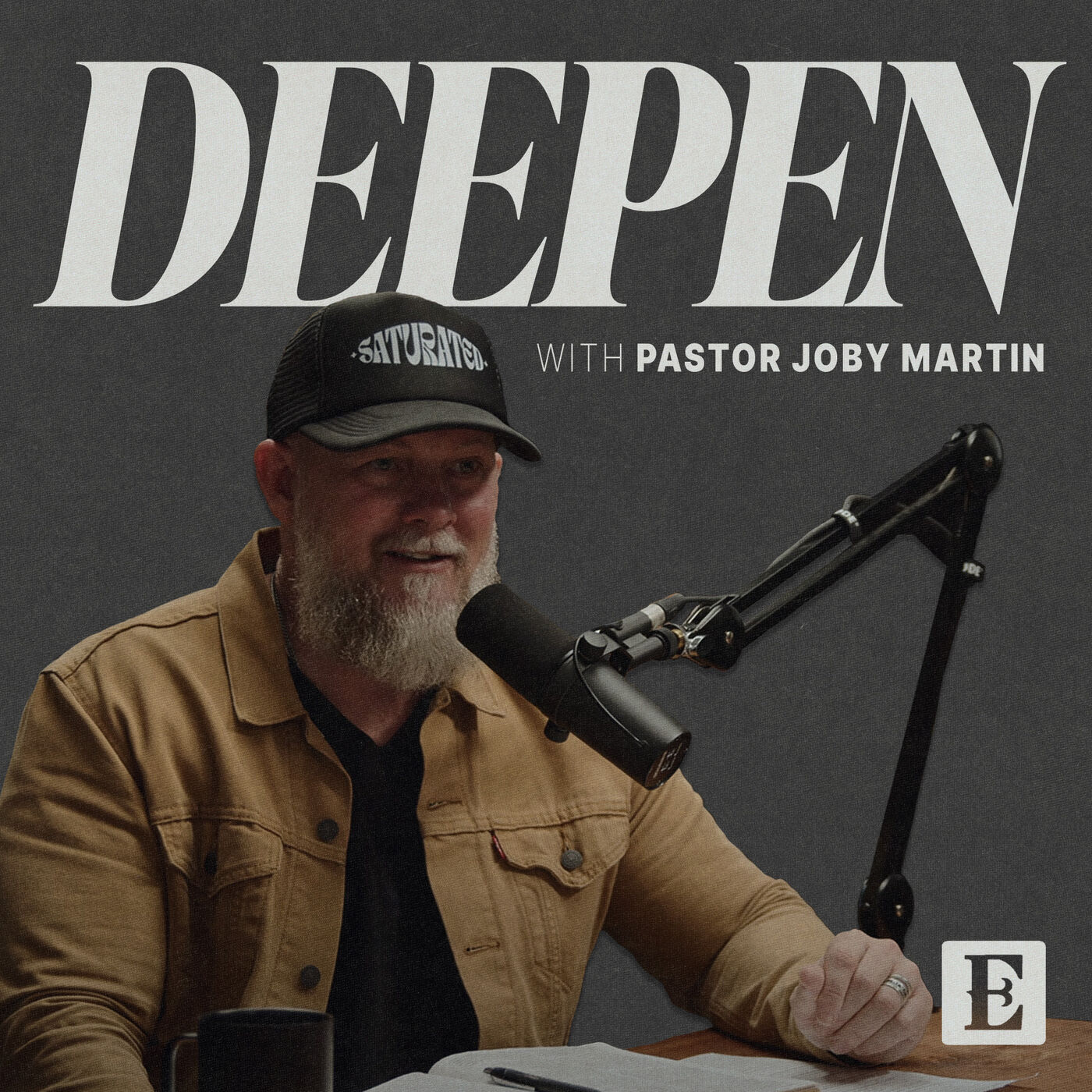
Deepen with Pastor Joby Martin
Pastor Joby Martin
Undaunted.Life: A Man's Podcast by Kyle Thompson
Undaunted.Life